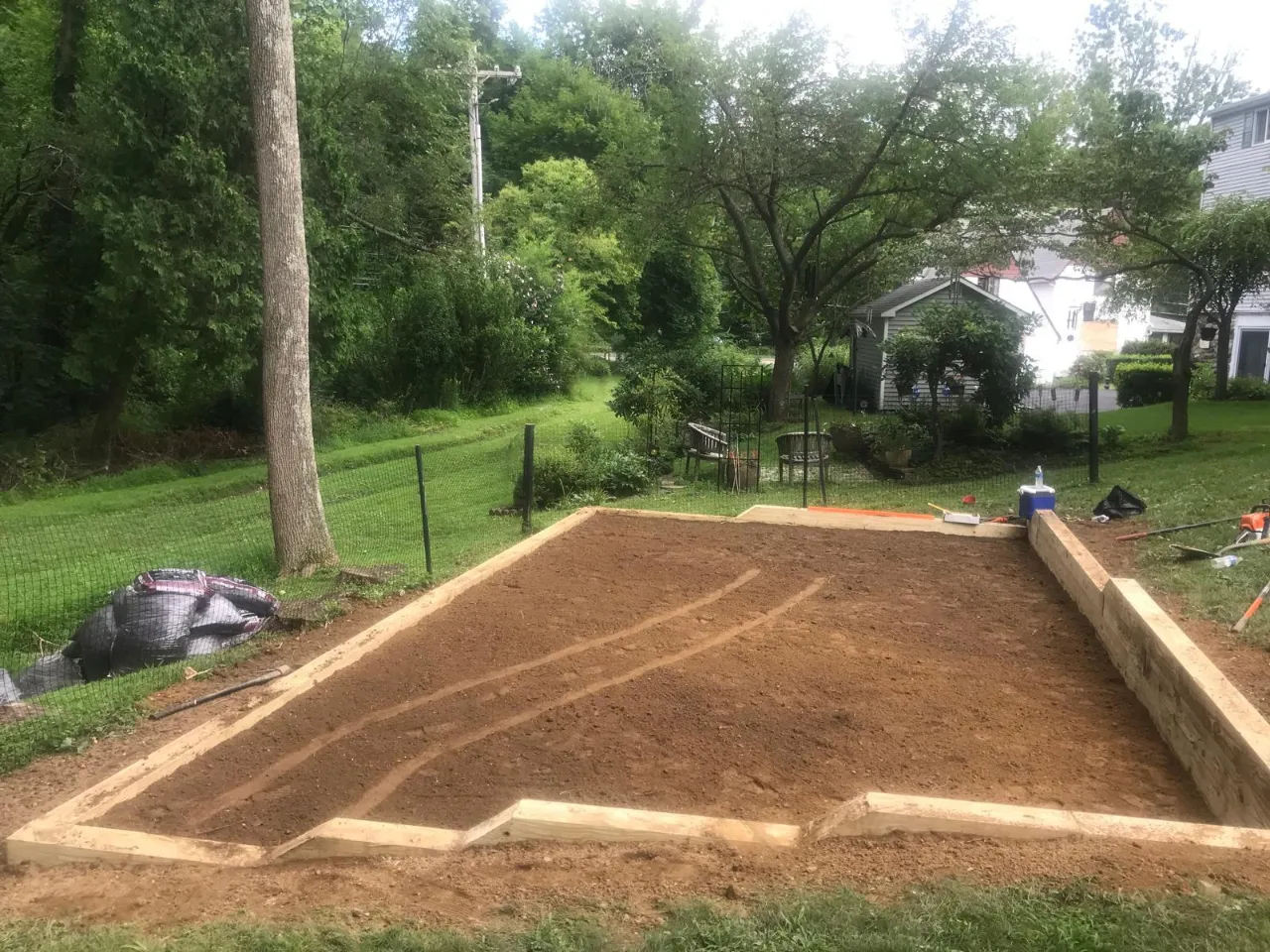
Sloped terrain is one of the most common landscape challenges on residential properties throughout Westchester and Putnam County — and the two primary solutions, retaining walls and regrading, approach the problem in fundamentally different ways. Retaining walls hold a grade change in place using structural support, creating level usable areas at multiple elevations. Regrading redistributes soil to eliminate grade changes, creating a gentler slope or a flat area without requiring a structural wall.
The decision between a retaining wall and regrading involves several factors: the steepness of the slope, the soil type, the available space for regrading material distribution, existing drainage patterns, local permit requirements, and the homeowner's long-term objectives for the outdoor space.
When a Retaining Wall Is the Right Solution
Retaining walls are the appropriate solution when a slope is too steep for regrading to address effectively — typically when the grade change exceeds 12 to 18 inches over the available horizontal distance, creating a slope percentage that would be unstable or difficult to maintain as lawn or planting. A 24-inch grade change over 4 feet of horizontal distance creates a slope of 50 percent — far too steep for lawn establishment and difficult to plant stably without erosion control.
Retaining walls are also the right solution when existing features — structures, trees, hardscape, or property boundaries — limit the horizontal space available for regrading. On Westchester properties where a 24-inch grade drop occurs within 3 feet of a home foundation, regrading would direct soil toward the foundation — creating the moisture and structural problems that wall construction avoids.
Drainage management is a key retaining wall design consideration for Westchester and Putnam County's clay-heavy soils.
— Morales Lawn & Garden Team
Water that was previously flowing down the slope will accumulate against the wall after construction — requiring proper drainage provisions (gravel backfill, perforated drain pipe at wall base) that prevent hydrostatic pressure from building up against the wall face. We engineer drainage into every retaining wall design for Westchester clay conditions.
When Regrading Is the Better Solution
Regrading is the appropriate solution when the grade change is modest — typically less than 12 to 18 inches — and there is adequate horizontal space to redistribute the grade change into a gentler, stable slope or a flat area. When a Westchester property has a 10-inch grade change over 20 feet of yard depth, regrading can typically create a stable 2 to 3 percent slope across the full area.
Regrading is also the appropriate solution when existing drainage patterns are the primary problem — when a yard slopes toward the home's foundation rather than away from it, creating the wet basement and foundation moisture conditions that are common on incorrectly graded properties. Corrective regrading redirects surface water away from structures without requiring wall construction, addressing the drainage cause rather than managing the symptom.
Need a Slope Assessment?
Get a free site evaluation. We'll recommend a retaining wall or regrading based on your specific conditions.
Cost Comparison for Westchester and Putnam County
Simple regrading of modest grade changes using existing on-site material is generally less expensive than retaining wall construction for the same area. However, the comparison changes with project complexity. Large regrading projects requiring significant topsoil import, engineered drainage provisions, and re-establishment of lawn or planting over the regraded area can exceed the cost of a well-built retaining wall.
Retaining wall cost varies significantly by material:
- Dry-laid fieldstone walls — typically less expensive
- Segmental retaining wall block — falls in the middle of the range
- Mortared masonry or engineered block — typically the highest cost
Wall height is the primary cost driver: a 12-inch wall is much less costly per linear foot than a 36-inch wall that requires the engineering and structural provisions that taller walls demand in Westchester County's clay soil conditions.
Permit requirements affect both approaches. Significant regrading that changes drainage patterns or disturbs more than a threshold area may require grading permits. Retaining walls above certain heights — typically 4 feet — require structural permits in most local jurisdictions. We advise on applicable permit requirements during the estimate visit.
Frequently Asked Questions
My backyard slopes toward my house foundation. Do I need a wall or regrading?
Almost certainly regrading — the goal is to redirect water away from the foundation, and a retaining wall doesn't solve that problem (it manages grade, not drainage direction). Corrective regrading that creates positive drainage away from the structure is the right solution for foundation drainage problems.
How do I know if my retaining wall needs an engineer?
In Westchester County, walls over 4 feet typically require an engineer's stamp for permit approval. Even for walls under 4 feet, clay soil conditions and surcharge loads (structures or heavy equipment above the wall) may warrant engineering review. We identify when engineering is required during the estimate visit.
Can I plant on top of a retaining wall?
Yes — planting on the retained area above a wall is a standard practice that stabilizes the upper soil and improves the wall's visual integration with the landscape. We recommend planting plans for retained areas as part of comprehensive retaining wall projects.
Will regrading kill the existing lawn and plants?
Regrading that moves more than a few inches of grade will remove existing lawn and surface planting. Restoration of lawn or planting over the regraded area is typically included in the scope of regrading projects — we include re-establishment in our regrading project estimates.
How long do retaining walls last in Westchester?
A well-built retaining wall with proper drainage in Westchester's clay soil conditions lasts decades — properly engineered block and stone walls regularly outlast the structures they're associated with. Walls that fail prematurely almost always fail due to inadequate drainage rather than the wall material itself.
Which is faster — a wall or regrading?
For modest grade changes, regrading is typically faster — it's earthwork rather than masonry construction. Retaining wall construction, particularly for walls requiring courses of stone or block, takes longer per linear foot but produces a finished result that doesn't require seeding or planting follow-up.
Get a Professional Assessment for Your Slope Problem
The right solution for your property's slope challenge depends on the specific grade, soil, drainage, and site conditions — factors that require a site visit to assess accurately. Morales Lawn & Garden provides free estimates for both retaining wall installation and regrading throughout Westchester and Putnam County, evaluating each approach for the specific conditions of your property.