Professional Mulching Services in Pleasantville, NY
Pleasantville Village's front-yard garden beds are among the most street-visible landscape features in our service area — compact beds visible from the sidewalk on every block, where fresh mulch makes an immediately noticeable improvement to property appearance and curb appeal. The investment in professional spring mulching on a Pleasantville property returns more immediate aesthetic value per dollar than almost any other landscape service — because the transformation from last season's faded, weedy bed to fresh, clean, deeply colored mulch is visible to every neighbor and passerby from the moment the application is complete.
Front-yard garden bed mulching in Pleasantville Village prioritizes the appearance from the street viewing angle — applying mulch evenly across the full bed area, maintaining crisp clean edges where bed meets lawn, and ensuring that mulch is contained within the bed boundaries without overflow onto adjacent hardscape or lawn areas. We complete every Pleasantville mulching visit with a blowdown of any mulch that landed outside the intended bed area — leaving the adjacent lawn, sidewalk, and driveway surfaces clean and the bed boundaries sharp.
Pleasantville's compact front yard beds often have older ornamental plantings with established root systems at or near the soil surface. These mature plants require careful mulch depth management around their crowns — pulling the mulch back from crowns to maintain the 1-to-2-inch clearance that prevents moisture concentration against bark and stem tissue. On Pleasantville's older properties, this crown clearance maintenance is particularly important for established shrubs that may have been receiving too much mulch for multiple seasons and show the subtle stress signs — die-back at the crown, persistent moisture under the mulch layer — that over-mulching creates over time.
Spring mulching timing for Pleasantville Village follows the standard Westchester County window — mid-April through mid-May — adjusted for the specific conditions of each property. Properties with established spring-blooming bulbs — tulips, daffodils, hyacinths — in garden beds require waiting until after these bulbs have completed their bloom and begun to die back naturally before mulching is applied. Applying mulch before bulb foliage has matured and died back naturally pushes the foliage underground before photosynthesis has replenished the bulb's energy reserves for the following year's bloom.
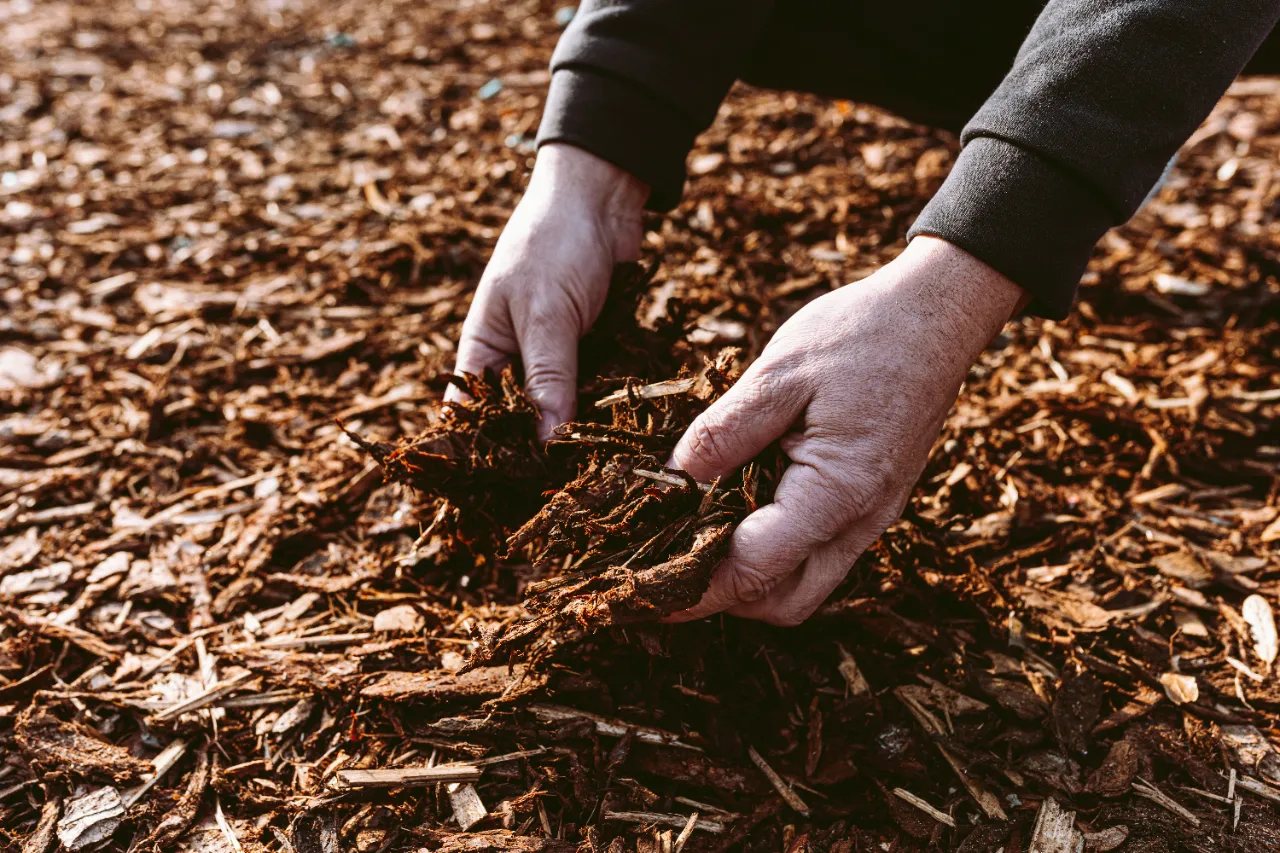
Mulch volume management on Pleasantville's small-scale beds requires accurate calculation to avoid either under-application that leaves bare soil visible between plants or over-application that creates excessive depth and crown conditions. We estimate bed area during the estimate visit and calculate material volume based on the correct 2-to-3-inch application depth for the available bed space — arriving with the right material volume rather than a generic load that must be estimated in the field with the associated risk of under-delivery or expensive material waste.
Pleasantville's compact Village setting makes every landscape service immediately visible to the neighborhood community — and mulching quality is one of the most immediately apparent landscape indicators when driving or walking through Village residential streets. Fresh, correctly applied mulch on a Pleasantville property creates strong curb appeal that reflects positively on the homeowner and contributes to the attractive Village character that all Pleasantville residents benefit from. Incorrectly applied mulch — too deep, with volcano mounding, and overflow onto adjacent surfaces — creates the opposite impression.
For Pleasantville homeowners who coordinate mulching with other spring landscape services, we integrate mulching into the seasonal program in the correct sequence — bed cleanup and edging first, early spring planting second, mulching third. This sequencing ensures that the fresh mulch is the finishing layer on a properly prepared bed rather than an application over winter debris or freshly planted but still unsettled soil. The integrated service approach produces better overall results than scheduling mulching in isolation from the other spring services that prepare the bed for it.