Professional Lawn Mowing in Croton Falls, NY
Croton Falls's rural North Salem character creates lawn mowing conditions distinct from the suburban communities farther south in Westchester. Properties here typically have smaller maintained lawn areas relative to total lot size — with the majority of each parcel in natural woodland rather than maintained turf. The maintained lawn areas that do exist are often surrounded by native woodland, sit on rocky, thin soils with limited moisture retention, and have informal edges that require periodic definition rather than the crisp formal boundaries typical of suburban properties. Morales Lawn & Garden provides professional mowing appropriate for Croton Falls's specific rural character.
Mowing Croton Falls's Rural Lawn Areas
Lawn areas on Croton Falls rural properties are typically defined by function rather than design — they are the areas around the home and outbuildings that are kept mowed for practical use and visual appeal, surrounded by natural woodland that is maintained but not mowed. We work with Croton Falls homeowners to establish and maintain consistent mowing boundaries that reflect their preference for each property — distinguishing the kept lawn area from the adjacent natural areas in a way that looks intentional rather than neglected.
Rocky terrain affects mowing technique on Croton Falls properties where bedrock outcroppings are close to the surface. Mowing over areas with very thin soil above rock requires higher deck height settings to avoid the scraping that occurs when the mower deck contacts exposed rock or very thin soil surfaces. We assess rocky areas during our initial property visit and set deck height to accommodate the terrain, accepting a slightly longer cut in the rockiest areas rather than risking equipment damage from contact with subsurface rock.
Edge Management and Woodland Boundary Maintenance
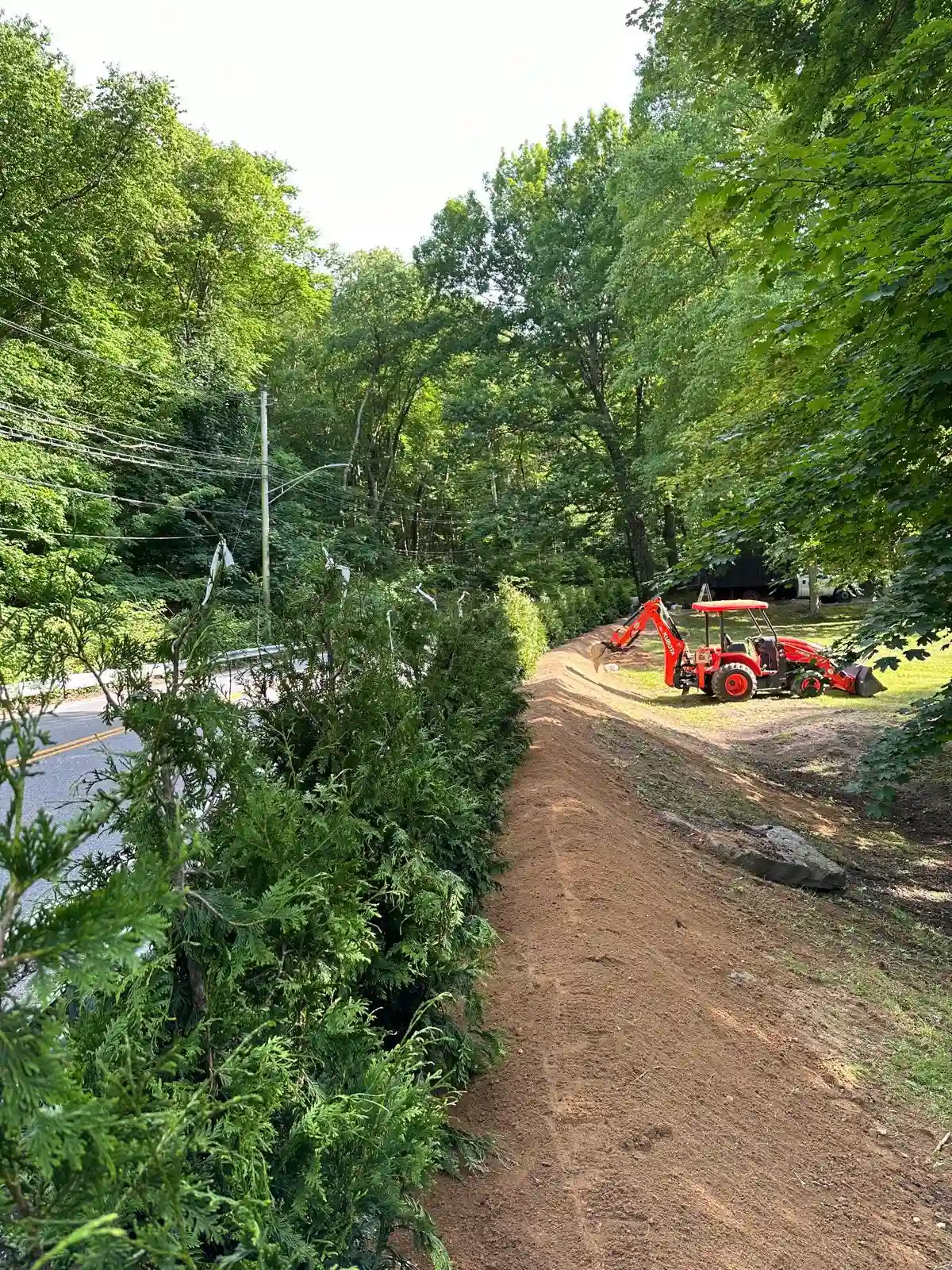
Lawn-to-woodland boundaries on Croton Falls properties require periodic redefinition as grass and brush encroach from the woodland edge into the maintained turf area. Over a season, without active edge management, this encroachment can reduce the maintained area noticeably and give the lawn an overgrown, untended appearance at its margins. We string trim and define woodland edge boundaries on each visit — maintaining the clean transition between mowed and natural areas that gives Croton Falls lawns their managed appearance.
Native plants encroaching from adjacent woodland into lawn areas in Croton Falls include ferns, wild raspberry, and various native grasses and forbs that regrow vigorously after each mowing. While these plants are ecologically valuable in the woodland context, their presence in the maintained lawn area creates an irregular, patchy appearance if not managed. We address this encroachment consistently through edge trimming and recommend herbicidal or physical barrier options to Croton Falls homeowners where woodland edge encroachment is persistent enough to require a more permanent solution.
Professional Mowing for Croton Falls's Rural Community
Croton Falls's rural location means that professional lawn mowing service options are more limited than in southern Westchester — making reliable, quality service especially valuable for homeowners who want their properties maintained consistently without the uncertainty that comes from less organized providers. We serve Croton Falls with the same reliability standard that we apply across all of our service area — showing up on schedule, completing the full scope on every visit, and maintaining the property to the standard that reflects Croton Falls homeowners' investment in their rural Westchester properties.
Drought sensitivity is a consideration for Croton Falls lawns during July and August. Thin soils over rocky terrain retain less moisture than deeper soil profiles, meaning Croton Falls lawns can show drought stress earlier in a dry summer than properties in communities with deeper, sandier soils. We raise mowing height slightly during drought conditions to reduce the additional stress that short-cut turf experiences during dry periods — a responsive technique that supports turf health through the most difficult weeks of the Westchester summer.